Tuesday, June 26, 2018

Fastest supercomputer

Briefly speaking,
  1. supercomputer is the personal computer in the next 20 years. And it is about 10, 000 faster. This means, generally, compute is 100 faster in every 10 years. But if you pile 10, 000 cores together, does the speed surprise you? You still need to handle interconnect and heat dissipation.
  2. Fast processor speed is not enough. It depends on your application. If your codes and software, as well as other I/O in the ecosystem doesn’t follow up, your compute is just empty spinning and waste electricity.
  3. The fastest computer as in 2018 has a speed at 200 peta (=2e17, by IBM summit). I guess the application is still falling behind. Global weather prediction is still the largest demand. Now GFS and ECMWF are using upgraded computer at 8.5 peta, my workplace OU has only 0.35 peta. So it is about 5 years fall behind the fastest computer.
  4. Do you really need supercomputer? 99.99% people only need a smartphone’s speed for youtube video or WeChat communication. So don’t worry it. Focus on what you can do best and outsource the rest.
北京,过去15年房价增长13.2倍,年化涨幅是18.77%。(1+18.77%)^15=13.2
问: 为什么处理器芯片越来越便宜,房价却越来越贵?
答:因为半导体工艺的进步,可以将晶体管做得越来越小,越来越密集。而人类的体型基本是不变的,却有越来越多的人涌向大城市,房价只是对这种涌入的一种壁垒,通过抬升居住成本引流,本质上是一种市场机制。每个人都向往大城市的生活,然而不是每个人都负担得起成本罢了。
fastest computer ranking: https://www.top500.org/
日本正着力研发世界上运行速度最快的超级计算机,以便为人工智能领域的研究搭建一个平台。CNN最近的报道披露,日本预计在2018年4月份之前完成这个名为“人工智能桥接云基础设施”(ABCI)的超级计算机的研发计划。
日本国家高级产业科学技术研究所(NIAIST)的所长关口智嗣(Satoshi Sekiguchi)解释:“现行的超级计算机系统的运算速度一般比个人电脑快100万倍左右。”据关口表示,超级计算机在一天内的处理内容,个人计算机需要花3000年才能完成。而在体积方面,日本的这台超级计算机将占地1000平方米,所占空间相当于一个能容纳30到40辆车的停车场。
关口表示,ABCI的研制算是为日本制造商建立一个研究平台,帮助它们开发和改进无人驾驶汽车、机器人和医疗诊断服务等。“超级计算机对于促进人工智能领域的发展来说,是一个极其重要的工具。”
而中国的“神威•太湖之光”计算机目前被用于天气预报、制药研究和工业设计等领域。
2018.6
“巅峰”的运行速度令人惊讶。它能以每秒20亿亿次——或200千兆次 (200 peta)——的速度进行数学计算。像“巅峰”这样花费了2亿美元政府资金建造的超级计算机可加快电脑前沿技术的发展,比如人工智能和庞大数据处理的能力。
“巅峰”由数排黑色的、冰箱大小的单元组成,总重量达340吨,配置在一间9250平方英尺(约合859平方米)的房内。由IBM的9216个中央处理芯片和另一家美国科技公司Nvidia的2.7648万个图像处理器提供运算力,它们被185英里(约合298千米)的光缆联系在一起。
“巅峰”的冷却需要每分钟4000加仑水(约合1.5万升),而这台超级计算机所消耗的电力足以为8100户美国家庭提供照明。
2018
NOAA upgrade its supercomputer from 5.6 petaflops to 8.4 petaflogs, or 4.2 petaflogs per side. (Equivalent to 2011’s fastest)
The NWS has been using supercomputers for decades. The latest major update to the computers’ was in 2016. Currently, the combined processing power of NWS super computers is 5.78 petaflops, which is more than 10,000 times faster than the average desktop computer.
ECMWF
Cray XC40, 8.5 petaflogs, 130 k cores
OU Schooner: 0.35 petaflog, 10 k cores
2005.8.29
The computer firm houses Blue, NOAA’s primary forecasting computer system, at an IBM facility in Gaithersburg, Maryland. A backup system, White, is located at a NASA site in Fairmont, West Virginia.
The two machines rank as the world’s 69th and 70th most powerful computers, according to the TOP500 List of Supercomputers.
2017.6
除了助力探月工程、载人航天等政府科研项目外,天河二号目前已经逐渐应用于民用领域,比如石油勘探、汽车飞机的设计制造、基因测序等。
天河二号还可应用于娱乐产业,现在通过超级计算机制作动漫和3D电影已经成为潮流。电影《阿凡达》动漫渲染制作耗时一年多完成。如果用天河二号,仅用1个月就可制作出与《阿凡达》动染效果相当的影片。
中国商用飞机设计有限公司北京研究中心利用约2.4万个CPU核开展了大型民机全参数气动优化设计,在天河二号计算6天,完成了其自身计算平台约需2年的工作量,极大地提高了优化工作效率。
华大基因互联网支撑与发展中心负责人说,天河二号具有强大的计算能力,以500人规模的全基因组信息关联性分析为例,华大基因利用原有计算机需1年时间,利用天河二号只需3个小时。华大基因是天河一号和天河二号的大商业客户。
从目前天河二号来看,计算节点的能耗约为18兆瓦,再加上散热系统的整体能耗在20兆瓦以上。如果正常运行,天河二号每年的电费就会超过1亿元,年耗电量约为2亿度。 每天耗费电费 10 万元。
“泰坦”和“红杉”的运算能耗比分别是1.95千万亿次/秒兆瓦和2.17千万亿次/秒兆瓦,运算能耗比略高于天河二号。
“实际上,这就要求未来的超算系统能够进行体系结构,硬件、软件和制冷等多方面的创新。” 张云泉说。
上海超算中心主任奚自立在2012年曾表示,上海超算中心拥有200万亿次计算能力,但是只有20-30%运算任务能够扩展到10万亿次,有20-30%的计算任务能够利用的计算力低于2万亿次。很多计算资源由于应用的问题实际上用不到,造成一定的浪费。
通过查阅Linpack的排名表可以发现,入围世界前500名的中国超级计算机一共有41部,其中有40部使用了英特尔的处理器,还有一部采用了AMD的处理器。另一边厢,我们的邻国日本富士通公司(FUJITSU)正在建造的一台超级计算机,则完全依靠日本自己的技术。
这个时代出现了很多平民化的超级计算机,譬如用浩鑫HTPC准系统凑起来的超级计算机,把一个学校的MAC电脑凑起来的超级计算机等等,这些看似玩具的东西居然一度占据了TOP500超级计算机排行榜,甚至谷歌自己用的服务器也是用这种办法攒出来的。而在这个过程中,人们发现,限制超级计算机能力居然是功耗,人们不能堆积太多的数量是因为功率和发热限制,性能功耗比甚至比性能本身更重要。
周边硬件和软件的落后才是大型机的应用瓶颈。因此,真正令人欣慰的新闻,不应该仅仅是计算速度这一单项指标“世界第一”,而是我们的软件水平提高使得原有大型机的应用深度和领域进一步扩大。但是,在我们印象中,自1978年以来我们听到的关于计算机的新闻,都是计算速度的提高。这是因为软件上的成就,不容易介绍给外行(领导);计算速度概念简单易懂,而且还有国际组织排名,外行容易认识到这一成就。
这就好像武器一样,在和平时代,说出来够厉害,那只是面子问题;好用好卖,那才是实惠。
而美国超级计算机的建设方一般都是使用方。在榜单上排名第三、也是美国最快的 Titan 建设方是美国能源部,主要应用于美国能源部内部的核试验模拟
定位不同,建设方式自然就不同。国外超级计算机建设方一般是先有计算量需求,根据所需计算量设计系统,根据需求设计超级计算机的架构方式。中国是先进行建设,尽力提高建能,尝试满足更高的计算需求。
中科院超算中心主任迟学斌坦言:“脱离开发利用,超算就是一堆破铜烂铁。光有高性能机器,没有人才做高水平的服务,那效果是一样的,机器过 5 年就过时了。
当年GDP少的时候,他们说GDP是衡量一个国家实力最权威的标志~ 然后中国GDP上来了,他们又说工业制造才是衡量一个国家实力的标志~ 等中国的工业制造上来了,他们又说工业污染,国家实力是靠人均。 等人均上来了,他们又说发达国家都过无污染原生态的生活~越落后的地区幸福感越强~比如那个地图上都找不到,百姓只能果腹、毫无尊严的附庸国不丹
两个很有意思的现象:
1,凡是中国没有的,都是高精尖科技,是区分人种、素质、先进/落后的标志; 凡是中国有的,都是低技术含量的垃圾,都是偷的,大家都可以造;
2、凡是中国排名靠后的排名,都很有国际影响力,很权威、是区分人种、素质、先进/落后的标准 凡是中国排名靠前的排名,都没什么意思,发达国家都看不上眼,人家就喜欢小、慢、等着老百姓的良心~

Seymour Cray

father of supercomputer
Cray did not enjoy working on such ‘mundane’ machines, constrained to design for low-cost construction, so CDC could sell lots of them. His desire was to “produce the largest [fastest] computer in the world”.
Unlike most high-end projects, Cray realized that there was considerably more to performance than simple processor speed, that I/O bandwidth had to be maximized as well in order to avoid “starving” the processor of data to crunch. He later noted, “Anyone can build a fast CPU. The trick is to build a fast system.
During this period Cray had become increasingly annoyed at what he saw as interference from CDC management. Cray always demanded an absolutely quiet work environment with a minimum of management overhead, but as the company grew he found himself constantly interrupted by middle managers who — according to Cray — did little but gawk and use him as a sales tool by introducing him to prospective customers.
Cray decided that in order to continue development he would have to move from St. Paul, far enough that it would be too long a drive for a “quick visit” and long distance telephone charges would be just enough to deter most calls, yet close enough that real visits or board meetings could be attended without too much difficulty. After some debate, Norris backed him and set up a new laboratory on land Cray owned in his hometown of Chippewa Falls.
Cray avoided publicity, and there are a number of unusual tales about his life away from work (termed “Rollwagenisms”, from then-CEO of Cray Research, John A. Rollwagen). He enjoyed skiing, windsurfing, tennis, and other sports. Another favorite pastime was digging a tunnel under his home; he attributed the secret of his success to “visits by elves“ while he worked in the tunnel: “While I’m digging in the tunnel, the elves will often come to me with solutions to my problem.”

application

Pat Gelsinger, head of the Digital Enterprise Division at Intel, says that Moore’s Law will continue to apply for the next few years. In his keynote address at the Intel Developer Forumin Shanghai, he said that the performance of supercomputers would be measured in zettaflops (10 to the 21st power floating-point operations) per second by around 2029. With that power, he said it would be possible to make weather forecasts that would be sufficiently accurate for 14 days.
One petaflop (10[sup]15[/sup] power floating-point operations) per second would allow real time analysis of images taken by magnetic resonance scanners. Current systems need around two hours for such analyses.

Thursday, May 10, 2018

book, The Verbally Abusive relationship

The verbally abusive relationship (how to recognize it and how to respond), expanded 3rd edition
by Patricia Evans, 1992, 1996, 2010, 2012 (ebook)
Dr. Carl Putz,
If you could only tell people how to recognize verbal abuse, that would be something!

forward

The term “verbally abusive relationship” was introduced to the world in 1992. Many TV and radio hosts such as Oprah has helped spread the word.
They’ve wanted clarity. Thousands have told me,
I knew something was wrong; I just didn’t know what. Now I have a name for what I’ve suffered.
I hear from men, too. …. I haven’t seen a verbally abusive woman change — that is, one who constantly criticizes, accuses, or rages at him.
I noticed that men are slower than women to reveal the details of what they hear and experience. One reason is that women are typically the victims. Another reason is they have been taught to be protective of their partner or to take it.
Many couples counselors have been trained to see any problem in a relationship as belonging equally to both persons. However, the correct way is, when they hear one partner say something like, “she blows things out of proportion,” they immediately separate the couple to begin one-on-one counseling.
If they want to change from a verbal abuser and controller, they need to stop their irrational behavior, such as making statements that attempt to define their partners’ inner world for them. That is, characterizing their partner’s motives, needs, feelings, and even very natures in their own terms. For example:
  • Motive: you’re trying to start a fight
  • Want: you just want to be right
  • Feeling: you don’t feel that way
  • Nature: you’re too sensitive

introduction

The verbally abusive guy is one person in public, but may become another in private. Common occurrences:
  • subtle diminishing
  • Angry outbursts
  • cool indifference
  • One-upmanship
  • witty sarcasm
  • silent withholding
  • manipulative coercion
  • unreasonable demands
They are cloaked in a “ what’s wrong with you, making a big thing out of nothing” attitude.
For the verbally abused one, there is no other witness to her reality, and on one who can understand her experience. Friends and family may see the abuser as a really nice guy and, certainly, he sees himself as one.
If you have been verbally abused, you have been told in subtle and not-so-subtle ways that your perception of reality is wrong and that your feelings are wrong.
My intention is to reveal the nuances and reality of verbal abuse. This book is based upon my interviews with 40 verbally abused women, ranging from age 21 to 66. Most of them had left a verbally abusive relationship.Many had tried different approaches to improve their relationship: explaining, overlooking, asking, begging, individual and joint counseling, living their lives as independently as possible, meeting their own needs. not asking too much, settling for less and less, being undemanding, being understanding. Nothing seemed to work. The dynamics of the relationship were often still a mystery.
The underlying premise of this book is that verbal abuse is an issue of control, a means of holding power over another.
Significant facts:
  • Generally, in a verbally abusive relationship, the abuser denies the abuse
  • verbal abuse most often takes place behind closed doors
  • physical abuse is always preceded by verbal abuse.

1. Evaluating your own experience

If you have been called an idiot, dummy, bitch, or any other showing lack of respect, you have been verbally abused. Name calling is the most obvious form. Other forms are less evident because:
  1. Mostly, verbal abuse is secretive. Usually, only the partner of the abuser hears it.
  2. Verbal abuse becomes more intense over time. The partner becomes used to and adapted to it.
  3. verbal abuses takes many forms and disguises.
  4. verbal abuse consistently discounts the partner’s perception of the abuse.
Verbal abuse is built into our culture.
How to identify a verbal abuser:
  1. You hadn’t meant to update him, but he seems angry with you several times a week and implies it’s your fault.
  2. When you feel hurt and try to discuss your upset feelings with him, you don’t feel as if the issue has bee fully resolved, or he refuses to discuss the situation
  3. You often feel frustrated by his responses because you can’t get him to understand your intentions.
  4. You are upset not so much about concrete issues ( how much time together, where for vacation), as about the communication in the relationship( what he thinks you said and what you heard him say)
  5. You sometimes wonder “what’s wrong with me? I shouldn’t feel so bad”
  6. He rarely seems to want to share his thoughts or plans with you.
  7. He seems to take the opposite view from you on almost everything you mention
  8. you sometimes wonder if he perceives you as a separate person
  9. You can’t recall saying to him “ Stop it!”
  10. He is angry or has “no idea of what you’re talking about” when you try to discuss an issue with him.
if you agree with two or more statements, this book is for you.
Verbal abuse may be:
  • Overt: “You are too sensitive”
  • Covert: “I don’t what you’re talking about”, when in fact the abuser does know.
The abuser may consciously or even unconsciously deny what he is doing, in any case, he is not likely to wake up one day and say, “ oh, my god! look what I ‘ve been doing, I’m really sorry. I won’t do it any more”.
Generally, the responsibility for recognizing verbal abuse rests with the partner of the abuser, because the abuser is not motivated to change. However, the partner may have difficulty recognizing the abuse for what it is because she is led to doubt her feelings.
If the partner shares her feelings with the perpetrator of the aggression, you can be absolutely certain, he will invalidate them. For example, he may make a sarcastic comment and then, when she protests, tell their it was a joke. The partner may then doubt the truth of her own perceptions.

2. Two kinds of power

  • Power Over: kills the spirit. shows up as control and dominance.
  • Personal Power: nourishes the spirit. Shows up as mutuality and co-creation.
Mutuality is a way of being with another person which promotes the growth and well-being of one’s self and the other person by means of clear communication and empathetic understanding.
Verbal abuse is personal, cultural and global problems which originate with the misuse of power. Power Over is one model of how the world is believed to work. This model may deny the value and quality of life. It has permeated the individual consciousness of thousands of years and took us to the brink of global chaos.
I believe the new order can arise only out of individual consciousness.
In a verbally abusive relationship, the partner learns to tolerate abuse without realizing it and to lose self-esteem without realizing it. She is blamed by the abuser and becomes the scapegoat.
The abusive relationship is toxic.
Individual as well as nations may be motivated to control and dominate others.
The verbal abuser and the partner seemed to be living in 2 different realities. The abuser’s orientation was toward control and dominance. The partner’s orientation was toward mutuality and co-creation.
The abuser doesn’t care to understand. He is more interested in “I win! You lose!” because, after all, in Reality I that is how one feels the power.

3, Personal Power: a look at reality II

Frich Fromm
Love is the child of freedom, never that of domination.
In a reality II relationship, each person realizes that:
  • To bring one’s thoughts and to hear the other’s
  • To express one’s enthusiasm and to delight in other’s
  • to reveal one’s self and to reflect the other
  • to value one’s self and to esteem the other
  • to enjoy one’s creation and to reassure the other
  • to pursue one’s growth and to nurture the other’s
  • to cherish one’s solitude and to honor the other’s
  • to follow one’s interests and to encourage the other
  • to act at one’s pace and to accept the other’s
  • to indulge one’s self and to give to the other
  • to protect one’s self and to comfort the other
  • to be one’s self and to let the other be
  • is to love one’s self and to love the other.
She has the right to:
  • Respect
  • shared sentiments
  • acknowledgment
  • kind words
  • dignity
  • Accurate information
  • esteem
  • open communication
  • appreciation
  • attentiveness
  • Warmth
  • caring
  • empathy
  • equality

4, Power Over: Reality I

The abuser rejects his partner’s warmth and openess, because these are the very qualities which he fears in himself. These means vulnerability., means death.
If you’ve never been in a verbally abusive relationship, you would have an extremely difficult time knowing what is’s like. If you’re in such relationship, you may have never recognized it.
不知庐山真面目的两种原因。
Every person is different and every abuser is different.

5, the consequences of verbal abuse

One of our greatest needs is to understand and to be understood.
Primary consequences of verbal abuse:
  1. a distrust of her spontaneity
  2. a loss of enthusiasm
  3. a prepared, on-guard state.
  4. an uncertainty about how she is coming across
  5. a concern that something is wrong with her
  6. an inclination to soul-searching and reviewing incidents with the hope of determining what went wrong
  7. a loss of self-confidence
  8. a growing self-doubt
  9. An internalized “critical voice”
  10. a concern that she isn’t happier and ought to be.
  11. an anxiety or fear of being crazy
  12. a sense that time is passing and she’s missing something
  13. a desire not to be the way she is, e.g. too sensitive
  14. a hesitancy to accept her perceptions
  15. a reluctance to come to conclusions
  16. a desire to escape or run away
  17. a belief that what she does best may be what she does worst
  18. a tendency to live in the future. e.g. everything will great when/after…
  19. a distrust of future relationship
Verbal abuse is damaging to the spirit. It takes the joy and vitality out of life. It distorts reality because the abuser’s response doesn’t correlate with the partner’s communication. The partner usually believes the abuser is being honest and straightforward with her and has some reason for what he says.
Since the partner doesn’t understand her mate’s motives, she “lives on hope”. She clings to those times when everything seems normal and belives that, in time, there won’t be so many upsets. She becomes even more hopeful if her mate says he loves her or occasionally bought them gifts, shared some personal concern, or compliment them on their appearance or a well-prepared meal.
Sticks and stones may break your bones, but cruel words can do worse: they can break your spirit, cripple your confidence.
He isn’t abusive while he’s courting you, but once he gets you, he switches, and you have no idea why.
The abuse only happens when you’re alone with him. Verbal abuse escalates gradually; you adapt. He uses tricks to keep you hoping the relationship will improve.
stop trying to explain and defend yourself. Instead, start setting limits: cut that out! or I don’t want to hear that.

conclusion: where do we go from here?

if you’re encountering verbal abuse:
  • Don’t call the person who indulges in verbal abuse a “verbal abuser”. Name-calling can be turned against you.
  • Don’t defend or explain yourself. stay away from him
  • Don’t get angry wit yourself for defending yourself. Stay away from him.
  • Don’t tell the abuser to read this book.
  • Don’t believe if you are nice enough and give enough, the abuser will be nice to you.
  • Don’t believe you must protect the abuser by keeping everything a secrete form family and friend you trust.
  • Don’t believe a therapist who hasn’t read this book will understand your situation.
  • Never, never, never put yourself in danger.
  • keep faith and trust in yourself and your own intuition.

book, A path with heart

A path with heart (A guide through the perils and promises of spiritual life)
by Jack Kornfield, 1993
The author is an American Buddist. He wrote this book to share his 10 years’ experience, how he struggled back to America after he practices Zen in Asia.
The book may have some good points. But they are too sparse in the book. And his experience is too personal that is probably not applied to general readers. So it is not very operational.
He had a good education such as Ivy league. He found some of the peers are successful but not happy so he tried to find a way out. To me, this is just a too rush conclusion. I think there are many different factors that drive a human for a living. It is his own responsibility to value each factor and choose a life that he wants to live. It will be also boring if everyone lives like a monk. After all, a single person has many roles to play in his daily and whole life.
Another interesting question comes to my mind is, what kind of life experience will help you enrich your spiritual life?
  1. live in the mountain, rural area, knew very little about modern technology, scientific advancement, and trending lifestyle.
  2. live in a busy city like New York or Shanghai, you are trying very hard to keep pace with the latest stuff. You know many details of the expensive brand of cars/handbags/watches/clothes/skin care and more. However, you manage to squeeze a little bit of time to unclutter your mind, by practicing Zen.
For me, I don’t refuse to live a modern life. But I am keeping an awareness of what I really want. I don’t need an expensive car or latest iPhone. But I still want to make sure I can afford high-quality education and some paid opportunity to open my mind.

Thursday, March 22, 2018

book, A short history of nearly everything

A short history of nearly everything, 2013
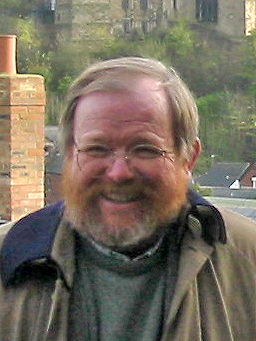
by Bill Bryson. spent 3 years in reading and writing.
He attended Drake University for 2 years before dropping out in 1972. Then backpack around Europe for 4 months. First visited Britain in 1973 then got a job in a psychiatric hospital. Met a nurse there and married her in 1975. Moved back to hometown in Iowa and completed his college degree. Settled in Britain in 1977.
His most books are on travel.

introduction

For you to be here now, trillions of drifting atoms had somehow to assemble in an intricate and intriguingly obliging manner to create you. it’s an arrangement so specialized and particular that it has never been tried before and will only exist this once. For the next many years, these tiny particles will uncomplainingly engage in all the billions of deft, cooperative efforts necessary to keep you intact and let you experience the supremely agreeable but generally underappreciated state known as existence.
Why atoms take this trouble is a bit of a puzzle. Being you is not a gratifying experience at the atomic level. For all their devoted attention, your atoms don’t actually care about you— indeed, don’t even know that you are there.
The bad news is that atoms are fickle and their time of devotion is fleeting. Even a long human life adds up to only about 650, 000 hours (72 years).And when that modest milestone flashes past, for reasons unknown your atoms will shut you down, silently disassemble, and go off to be other things.
To get from atoms to sentient upright modern human has required you to mutate new traits over and over in a precisely timely manner for an exceedingly long while. … The tiniest deviation from any of these evolutionary shifts, and you might now be licking algae from cave walls, or lolling walruslike on some stony shore, or disgorging air through a blowhole in the top of your head before diving 60 feet for a mouthful of delicious sandworms.
some science writers who pen the most lucid and thrilling prose:
  • Timothy Ferris
  • Richard Fortey
  • Im Flannery
  • Richard Feynman

1. How to build a universe: big bang

In 1965, Arno Penzia and Robert Wilson tried to make use of a large communications antenna owned by Bell Lab but were troubled by a persistent background noise. They described the problem to Princeton researchers, who were actively searching for some cosmic background radiation. The results are published in Astrophysical Journal and the two engineers won the 1978 Nobel Prize in physics though they knew very little about the theory.
Alan Guth, who pioneered the theory of cosmic inflation, said,
Although the creation of a universe might be very unlikely, Tryon emphasized that on one had counted the failed attempts.
Martin Rees makes an analogy with a very large clothing store.
Goldilocks principle. Originally from the children’s story, the three bears. A little girl sneaked into the three bears’ house and tried their porridge. One is too hot, one is too cold, and the third one is just right. In astrobiology, the Goldilocks zone refers to the habitable zone around a star.
The universe is boundless but finite. The closest analogy is a sphere that you will never reach the edge or stand at the center. Anywhere could be the center.

2. welcome to the solar system: how Pluto was spotted

Clark Chapman:
most people think that astronomers get out at night in observatories and scan the skies. That’s not true. Almost all the telescopes we have in the world are designed to peer at very tiny little pieces of the sky way off in the distance to see a quasar or hunt for black holes or look at a distant galaxy.
Pluto was first found in 1930 by Pervival Lowell’s Observatory in Flagstaff. He came from one of the oldest and wealthiest Boston families. Lowell died in 1916 and they resumed the search by hiring a young man from Kansas named Clyde Tombaugh. He had no formal training as an astronomer, but he was diligent and astute. After a year’s patient searching, he somehow spotted Pluto.

3. the Reverend Evans’s universe: he hunts supernovae

“I just seem to have a knack for memorizing star fields” Evans told me, with a frankly apologetic look. “ I’m not particularly good at other things,” he added. “I don’t remember names well.”
The term supernova was coined in 1930s by an odd astrophysicist Fritz Zwicky. He has an abrasive personality and erratic talents. He was notoriously aggressive, his manner eventually becoming so intimidating that his closest collaborator, a gentleman named Walter Baade, refused to be left alone with him. Anyway, he was capable of insights of the most startling brilliance. In 1934, Physical Review published their concise abstract about the idea of a neutron star.
Interestingly, Zwicky had almost no understanding of why any of this would happen. He did not understand the laws of physics well enough to be able to substantiate his ideas. His talent was for big ideas.
One of his favorite insults was to refer to people he did not approve of as “spherical bastards”, because, he explained, they were bastards no matter which way one looked at them.

4. The measure of things: earth’s size and mass

In 1683, Wren offered a couple of weeks’ay to people who can provide a solution why planets orbits in the ellipse.
Hooke was well known for taking credit for ideas that weren’t necessarily his own, claimed that he had solved the problem already but declined now to share it on the interesting and inventive grounds that it would rob others of the satisfaction of discovering the answer for themselves.
Halley tried hard to get Newton’s work published, even using his own pocket money.
The transit of Venus can be used to calculate the distance to the Sun. But the transit only happened in 1761, 1769, 1874,1882,2004, 2012.
Michell has designed a machine for measuring the mass of the Earth. He died before he can conduct the experiments and both the idea and the necessary equipment were passed on to Henry Cavendish.
Cavendish is a book in himself. He was born into a rich family. His grandfather ere dukes. He was the most gifted English scientist of his age, but also the strangest. Any human contact was for him a source of the deepest discomfort. Even his housekeeper communicated with him by letter.
Because of his asocial and secretive behavior, Cavendish often avoided publishing his work, and much of his findings were not even told to his fellow scientists.

5, the stone breakers: the birth of geology

the members met twice a month from winter to early summer, then went off to spend the summer doing fieldwork. These weren’t people with a pecuniary interest in minerals, you understand, or even academics for the most part, but simply gentlemen with the wealth and time to indulge a hobby at a professional level.

6, Science red in tooth and claw: fossil animals

7, elemental matters: Chemistry

8, Einstein’s universe: relativity

26, the stuff of life: DNA

29, the restless Ape: ax stone, fossil and mitochondrial DNA

p 465:
When I asked Harding about the book (The seven daughters of Eve), she smiled broadly but carefully, as if not quite certain where to go with her answer.
Well, I suppose you must give him some credit for helping to popularize a difficult subject.
And there remains the remote possibility that he’s right.
Data from any single gene cannot really tell you anything so definitive. If you follow the mitochondrial DNA backward, it will take you to a certain place — to an Ursula or Tara or whatever. But if you take any other bit of DNA, any gene at all, and trace it back, it will take you someplace else altogether.
They might have come from there, of course, but equally, they could have arrived from any of hundreds of other places. In this sense, according to Harding, every gene is a different highway, and we have only barely begun to map the routes.
she said,
No single gene is ever going to tell you the whole story.
so genetic studies aren’t to be trusted?
oh, you can trust the studies well enough, generally speaking. what you can’t trust are the sweeping conclusions that people often attach to them.
out-of-Africa is probably 95% correct. I think both sides have done a bit of a disservice to the science by insisting that it must be one thing or the other. Things are likely to turn out to be not so straightforward as eighter camp would have you believe. The evidence is clearly starting to suggest that there were multiple migrations and dispersals in different parts of the world going in all kinds of directions and generally mixing up the gene pool. that’s never going to be easy to sort out.

30, Good-bye: animal extinction by human


my summary: The book is an interesting read. It goes to the very beginning of each science branch: physics, geology, chemistry, biology, …. It is filled with many less-known personal stories of well-known professionals. I am amazed by how the author can include so many things in a single book and how broad the knowledge scope is.
The only drawback is that it is covering too much that I lost my focus several times. That’s why I tried to assign keywords to each chapter, and that’s why I could not finish the whole book right now.